
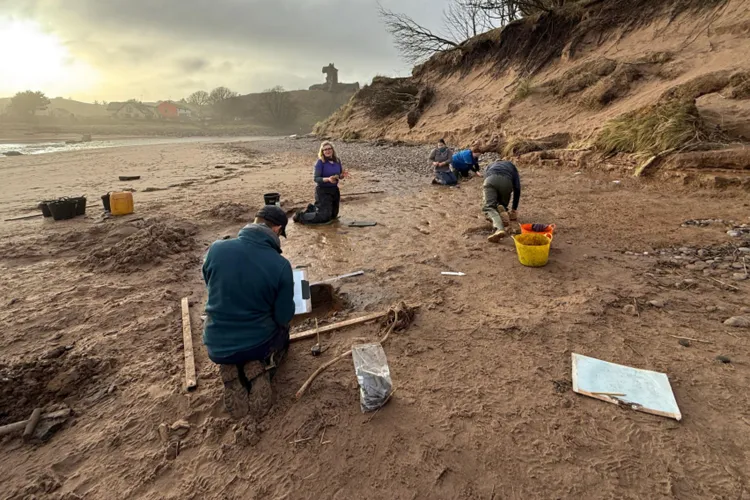
Angus, Scotland – A routine walk on the beach turned into an archaeological race against time when a couple found rare ancient footprints in Lunan Bay in Angus, Scotland. Ivor Campbell and Jenny Snedden were walking their dogs on the shoreline when they noticed “distinct marks” that had appeared after a shift in the sand following a recent storm.
Concerned that the discovery might be of historical importance, Campbell immediately contacted council archaeologist Bruce Mann. Recognizing the importance of the discovery and the urgency of preserving it before the ravages of weather erode it, Mann reached out to the University of Aberdeen. A team of archaeologists, including Professor Kate Britton, immediately set out to investigate the site.
What they found was extraordinary: the footprints were more than 2,000 years old, dating back to the beginning of the first century AD, the time of Boudica, Jesus, and the height of the Roman Empire. Radiocarbon dating confirmed the remarkable age of the prints, making them a rare and monumental discovery in the field of archaeology.
Professor Britton and his team were well aware that devastating storms and high spring tides could obliterate the delicate marks at any moment. “We prioritized getting to the site, preparing ourselves as quickly as possible,” he recalled. “It really was an archaeological emergency.” Despite facing “terrible” weather conditions, which they compared to a “sand-blast”, the team worked tirelessly for three days to document and preserve the footprints.
Campbell and Snedden played a vital role in this effort, assisting the archaeologists by allowing them to park their vehicles on their land and providing hot drinks and shelter from the cold. Their generosity and assistance proved invaluable during the challenging days of conservation.
However, when the team returned a week later to continue their work, the tide had already taken over the footprints. “The waves have destroyed the ancient footprints,” Professor Britton said with regret. “It’s a once-in-a-career thing, and to lose it so soon was heartbreaking.”
The footprints, which could provide invaluable insight into life during the Roman Empire, have now been lost to time. Britton urged the public to be vigilant about reporting newly discovered sites, especially those at risk, to prevent such priceless discoveries from being lost forever.
“There are well-known examples of footprint sites globally, but they are very uncommon, and many archaeologists have never had the opportunity to work on a site like this,” he said. “We must do everything possible to preserve them before they disappear.”