
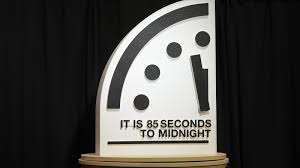
Humanity is nearing its tipping point, according to the Bulletin of the Atomic Scientists, who have moved the iconic “Doomsday Clock” forward 85 seconds to midnight, the closest it has ever come in its nearly 80-year history. This worrying adjustment highlights the growing risks from nuclear weapons, climate change and disruptive technologies, a stark reminder of the threats facing the planet.
What happened:
On February 20, 2025, the bulletin announced that the Doomsday Clock had been moved forward by four seconds, a decision based on increasing global threats. The new timing of the clock represents the most dangerous situation humanity has found itself in, with officials pointing to a “failure of leadership” among major world powers and increasing aggression, adversarial behavior and nationalism, especially in the context of the ongoing war in Ukraine.
“The threats we face from nuclear weapons, climate change and disruptive technologies are growing,” said Alexandra Bell, President and CEO of the Bulletin. “Every second counts, and we’re running out of time.” The status of the clock symbolizes the ever-increasing threat of man-made destruction, which has the potential to render the Earth uninhabitable.
The bulletin specifically notes that major countries, including Russia, China, and the United States, have failed to take meaningful steps to mitigate these existential threats. Despite ongoing warnings, these countries have engaged in more confrontational behavior, including increasing nuclear rhetoric and pursuing dangerous technologies without adequate safeguards.
Measures to prevent disaster:
Despite the grim outlook, the bulletin stressed that humanity still had a chance of avoiding disaster if prompt action was taken. To push back the clock from midnight, the bulletin outlined several key steps, including:
- Cooling down the nuclear arms race: Encouraging dialogue among nuclear-armed states to reduce missile defense investments and comply with the existing nuclear testing moratorium.
- Addressing biosecurity threats: To strengthen international cooperation to prevent the misuse of dangerous biotechnology, including biological threats arising from artificial intelligence (AI).
- Emphasis on renewable energy: Global leaders were urged to prioritize renewable energy sources and phase out fossil fuels to mitigate the effects of climate change.
- Regulation of AI: Establishing international agreements on the use of AI, particularly in military applications and nuclear command systems.
Legacy of Doomsday Clock:
The Doomsday Clock was created in 1947 as a symbolic warning of the dangers posed by nuclear weapons. The clock’s time has since been adjusted more than 20 times, reflecting changes in the global security landscape. Initially set at seven minutes before midnight, it was later moved to midnight after the Cold War ended, marking a brief period of peace. But in recent decades the clock has moved steadily closer to midnight as nuclear tensions, climate change and other global crises have escalated.
The Doomsday Clock, although symbolic, serves as a powerful metaphor for the threats facing humanity and a reminder of the urgent need for global cooperation and action. In January 2025, the clock was set to 89 seconds to midnight, marking a new high for the urgency of global action in response to the threats facing the world.
looking ahead:
As the doomsday clock approaches midnight, experts and advocates stress the importance of urgent global cooperation to combat these existential threats. Although the current situation is dire, the way forward is open – if nations and individuals are committed to safeguarding the future of the planet. The time is now, and every second counts.