
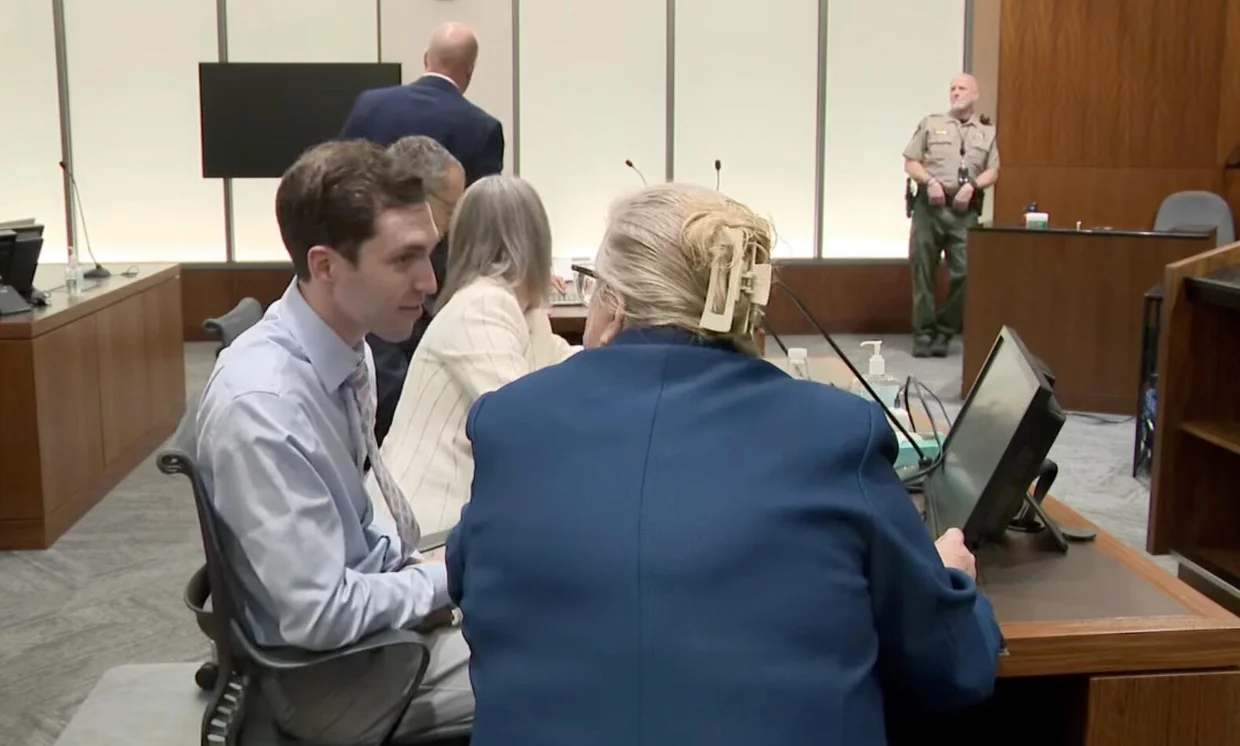
Provo, Utah – Tyler Robinson, 22, accused of murdering conservative activist Charlie Kirk, appears in court Thursday, Dec. 11, 2025, as his legal team pushes for further restrictions on media access. Robinson, who faces aggravated murder charges and the possible death penalty, was in court for a hearing regarding his pre-trial conditions. The hearing highlighted the ongoing debate over balancing the public’s right to know with the need to protect Robinson’s right to a fair trial amid the high-profile case.
What happened: Court appearance and request for media restrictions
Robinson, who appeared in court with shackles on his wrists and ankles, was greeted by family members in the front row of the courtroom. His mother looked emotional and his father and brother were sitting near her. The court session began with discussions in closed proceedings regarding previous decisions regarding media restrictions, including the issue of images of Robinson in broadcasts.
Robinson’s legal team raised concerns about continued media coverage and sought to ban or remove cameras from the courtroom after previous violations of the judge’s order. The Media Coalition, which continues to advocate transparency, objected to the limitations being placed on press access. The issue focuses on the delicate balance of protecting Robinson’s right to a fair trial and protecting the public’s right to be heard in an open court.
Who is Tyler Robinson?
Tyler Robinson is facing charges in the tragic death of Charlie Kirk, a prominent conservative activist and founder of Turning Point USA, who was murdered on the Utah Valley University campus in Orem, Utah in September 2025. Robinson has been at the center of the investigation, which has received significant media attention due to the nature of the crime and his high-profile political ties to figures such as former President Donald Trump.
Robinson, who was initially detained following a nationwide search, has been the subject of sustained media scrutiny since his arrest. His legal team is concerned that this pre-trial publicity could affect the fairness of his case. His defense lawyers have requested that the courtroom be cleared of cameras to avoid potential bias against their client.
Debate over media access and the need for public trust
The case has sparked a nationwide discussion about the role of the media in criminal trials. While many believe that transparency in the courtroom is necessary to ensure public trust in the justice system, Robinson’s defense team argues that extensive media coverage could negatively impact the jury pool, citing altered images of Robinson circulated online and political commentary surrounding the case.
The media coalition, led by attorney Michael Judd, has strongly opposed requests to limit media access, arguing that open courts are a cornerstone of American justice. Judd and others in the coalition have emphasized that, while some restrictions are necessary to maintain impartiality, limiting access to hearings or excluding the press from proceedings undermines the integrity of the legal process. In previous filings, Judd argued that transparency promotes public trust and helps ensure a fair trial.
Public and social media reactions: polarizing views
The matter has drawn strong reactions from various sides, with some supporting the emphasis on transparency and others stressing the need for caution due to growing public interest. Charlie Kirk’s widow, Erica Kirk, has been vocal in her call for full transparency in the legal process, insisting that the public is entitled to see what happens in the courtroom.
“I want the world to see what’s happening in the courtroom,” Erica Kirk said at a recent town hall moderated by CBS News editor-in-chief Bari Weiss. “You want to watch the video of my husband being murdered and laugh? There is something very bad in your soul, and I am praying that God will save you.”
Additionally, the case has raised concerns about political violence, particularly due to the ties between Kirk and right-wing political figures. Robinson’s legal team is concerned that the case could become a political spectacle, potentially affecting the fairness of the trial.
What happens next: Court decisions and legal proceedings
Judge Tony Graf has said he will issue further decisions on December 29 regarding the scope of media access and other issues related to the trial. Robinson’s lawyers continue to press for restrictions on the press, while the Media Coalition remains committed to maintaining the public’s right to information.
Meanwhile, the investigation continues, and Robinson’s trial date remains uncertain. The case is expected to remain in the public spotlight as it progresses, especially with the possibility of the death penalty, which has drawn national attention due to its political context.
This story may be updated with more information as it becomes available.
